
Trucking & Owner-Operators
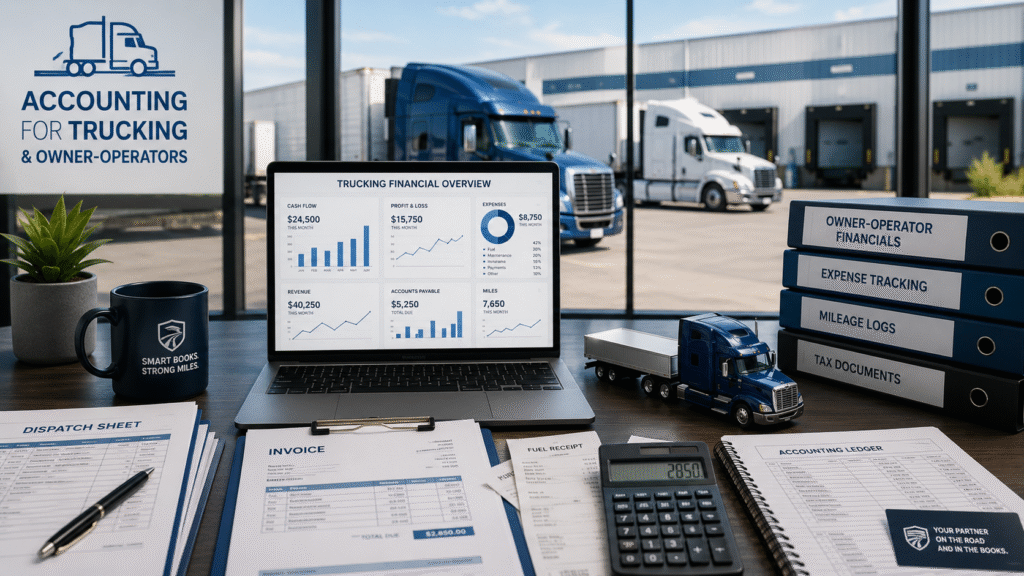
Trucking has its own tax rulebook layered on top of the standard one — a fuel tax system that spans provinces and states, a meal deduction method built specifically for long-haul drivers, and a CCA rule that actually works in your favour if you know it exists. Owner-operators who don’t have an accountant who understands this niche end up either overpaying or under-claiming, often without realizing which one is happening.
The Problems We Solve
- IFTA reporting. The International Fuel Tax Agreement requires quarterly reporting of fuel purchased and distance travelled across every jurisdiction you operated in — errors here are common and trigger penalties that are entirely avoidable with the right tracking system.
- Meal deduction method selection. Long-haul drivers can choose between a simplified per-day CRA rate or a detailed, receipt-based method — picking the wrong one for your actual travel pattern leaves real deductions on the table.
- CCA on heavy trucks. This is the detail most owner-operators don’t know: the Class 10.1 “luxury vehicle” cap that limits CCA on passenger cars does not apply to heavy trucks. Freight-hauling trucks and tractors above the relevant rated capacity may instead fall under Class 16, which depreciates at 40% on a declining-balance basis — the correct class depends on the specific vehicle and its use, and it’s worth confirming rather than assuming. Not knowing this distinction means significantly under-claiming depreciation.
- HST on interline settlements. Payments between carriers for interlined freight are frequently handled incorrectly, creating HST exposure that’s avoidable with the right treatment from the start.
- Lease vs. buy decisions. Choosing between leasing and owning a tractor-trailer needs to account for fuel surcharge revenue and maintenance reserve planning, not just the monthly payment comparison.
Why Trucking Is Taxed Differently
The Class 10.1 exemption for heavy trucks is a single distinction that changes depreciation planning substantially for this industry and almost no other. Combine that with IFTA’s own quarterly filing calendar — completely separate from your HST filings — and trucking carries a compliance rhythm that doesn’t map onto any standard small business template.
Our Expertise
We bring the same transaction-level reconciliation discipline we apply to complex, multi-account forensic accounting work to trucking files — tracking fuel purchases, interline settlements, and CCA on heavy equipment with the specific rules of this industry in mind, not a generic small-business template applied without adjustment.
Common Questions
Does the passenger vehicle CCA cap apply to my tractor-trailer? No — that cap is specific to passenger vehicles under Class 10.1. Depending on the vehicle, heavy freight trucks may instead fall under Class 16 (40% declining balance) without that restriction, meaning faster depreciation is available — but the right class depends on the specific vehicle.
Do I need to file IFTA even if I only cross into one other province? Generally yes, if you’re operating a qualifying vehicle across jurisdictional lines — the filing requirement isn’t limited to long cross-country routes.
Which meal deduction method should I use? It depends on your actual travel pattern — the simplified per-day rate is easier to track, but detailed receipts can produce a larger deduction for some long-haul schedules. Worth comparing both against your actual trip logs.
Ready When You Are
IFTA, meal deductions, and the CCA cap that doesn’t apply to your truck — trucking tax has its own rulebook. Let’s make sure yours is being used to your advantage, not against you.
Why choose Syed CPA
Contact Info
- +1 (647) 977 8977
- admin@syedcpa.ca