
Manufacturing
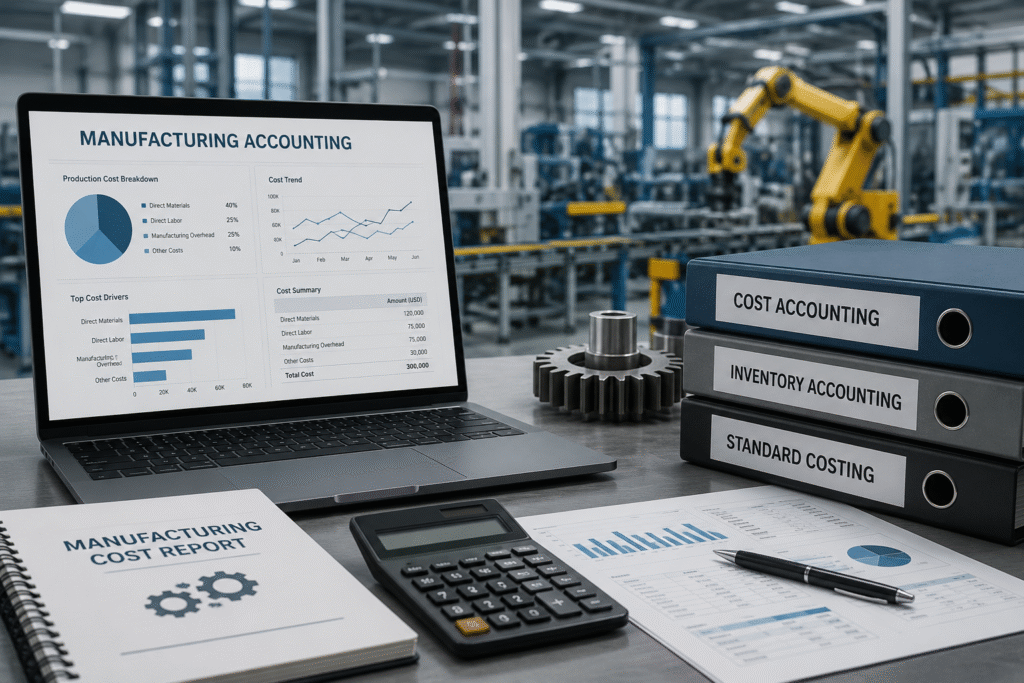
Manufacturing businesses live and die by a number most owners never actually verify: cost of goods sold. It sits at the intersection of your inventory counts, your production floor, and your tax return, and a small error compounds every single year it goes uncorrected. Add in equipment that depreciates on a completely different schedule than office furniture, and a research credit almost nobody in this sector claims, and you’ve got an industry where “just use QuickBooks” quietly leaves real money on the table.
The Problems We Solve
- Inventory valuation. Raw materials, work-in-progress, and finished goods each need to be costed properly under ASPE 3031 — using the wrong method, or simply not updating unit costs as input prices change, understates or overstates COGS and throws off your real margin picture.
- CCA classification for equipment. Manufacturing and processing machinery generally falls under Class 43 (30% declining balance) rather than general Class 8 equipment. Eligible M&P equipment acquired after 2015 and before 2026 could instead qualify for Class 53 at 50% — but that window closed at the end of 2025, so equipment you’re acquiring now needs to be reviewed on its own terms rather than assumed into the old class. Misclassifying equipment is one of the most common CCA errors we see reassessed on manufacturing files, and it costs you accelerated deductions you’re entitled to.
- SR&ED eligibility. Most manufacturers assume SR&ED is a “tech company” credit. It isn’t. Process and product improvements can qualify where there’s genuine technological uncertainty, systematic investigation, and the documentation to support it — and it’s an often-overlooked opportunity in this sector. Ontario manufacturers may also want to look at the Ontario Made Manufacturing Investment Tax Credit, a separate provincial credit for qualifying investments in buildings, machinery, and equipment.
- Overhead absorption. Fixed costs (rent, utilities, supervisory wages) and variable costs (direct materials, direct labour) need to be allocated into COGS using a consistent method, or your reported margins won’t match what’s actually happening on the floor.
- Landed cost of imported components. Duty, brokerage fees, and freight on imported inputs need to land in the right account rather than getting buried in a general expense line, or your true per-unit cost is invisible to you.
Why Manufacturing Is Taxed Differently
Very few industries have a tax outcome this sensitive to a physical inventory count. A miscounted or mis-costed year-end inventory doesn’t just misstate your balance sheet — it directly changes your taxable income for the year, and the error rolls forward until someone catches it. On top of that, the M&P-specific CCA classes and SR&ED eligibility mean two manufacturers with identical revenue can have meaningfully different tax outcomes purely based on how well their capital assets and process improvements were tracked.
Our Expertise
We’ve restructured full manufacturing tax and reporting files into audit-ready, multi-tab workbooks — trial balance through Schedule 8, Schedule 125, and Schedule 100 — with COGS and inventory activity flowing through dynamically rather than being manually re-entered each period. We’ve also worked directly with SR&ED-eligible research and development credit strategy for a technology-manufacturing hybrid business, including the T4 employee structuring needed to support a claim. This is hands-on file work, not a generic checklist.
Common Questions
- Does SR&ED really apply if we’re not developing new technology, just improving our process? Yes — process and product improvement work that involves genuine technical uncertainty and systematic experimentation can qualify, even without inventing anything new to the world.
- What’s the actual difference between Class 8 and Class 43 for my equipment? Class 43 is specific to manufacturing and processing machinery and depreciates faster (30% declining balance) than general-use Class 8 equipment — using the wrong class means slower deductions than you’re entitled to.
- How often should we be re-costing inventory? At minimum annually at year-end, but if input costs move meaningfully during the year, more frequent updates keep your interim financials — and your pricing decisions — accurate.
Ready When You Are
Your COGS number is either the most reliable figure in your financials — or the one quietly costing you money. If you’re not sure which one describes your business right now, that’s exactly the conversation worth having.
Why choose Syed CPA
Contact Info
- +1 (647) 977 8977
- admin@syedcpa.ca